.png)
Niche Transportation Recruiters: Frequently Asked Questions for 2026
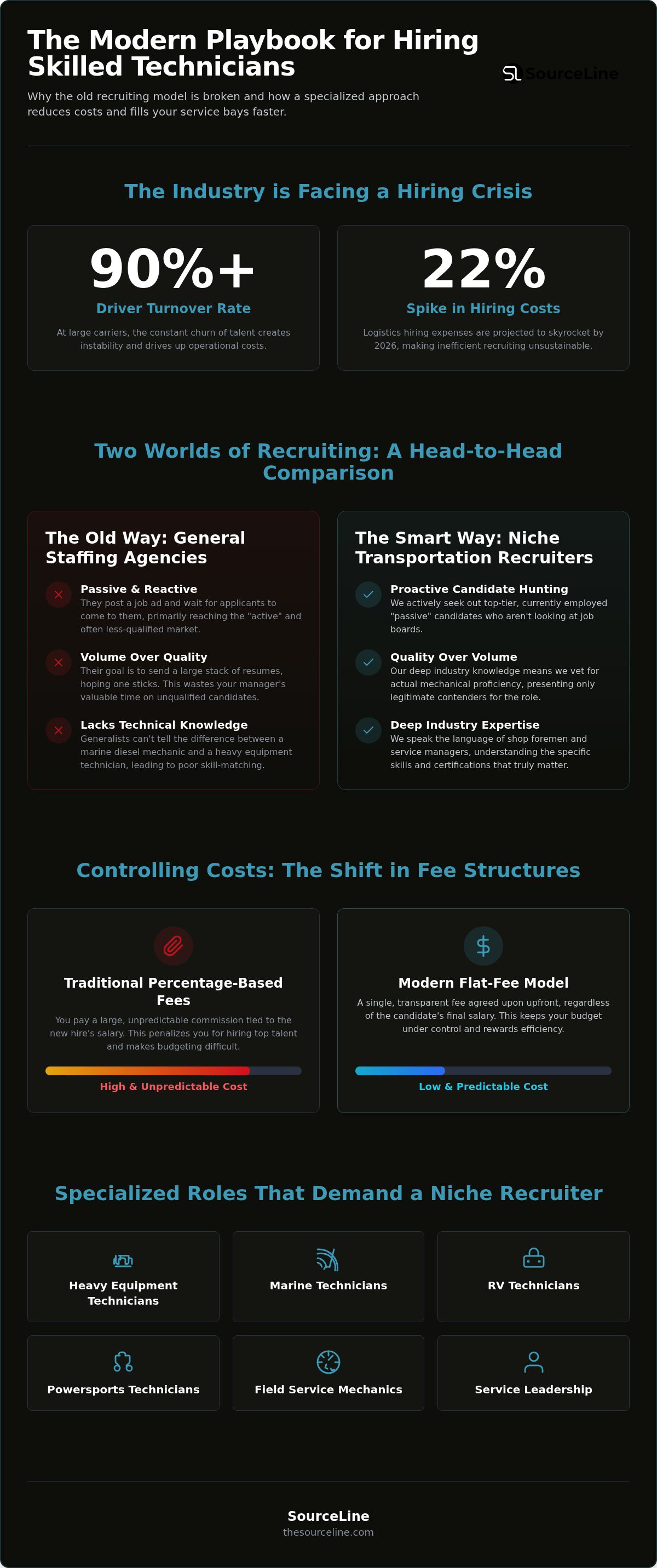
With driver turnover at large carriers exceeding 90% and logistics hiring costs spiking by 22% in 2026, the traditional staffing model is failing the industry. You've likely felt the frustration of paying a massive commission only to receive a stack of unqualified resumes from a generalist agency. It's an expensive, inefficient cycle that leaves your service bays empty and your fleet grounded. Partnering with niche transportation recruiters who actually understand the difference between a marine technician and a heavy equipment mechanic is no longer a luxury; it's a necessity for survival.
We agree that your business shouldn't be penalized with high percentage-based fees just to find reliable talent. This FAQ guide promises to show you exactly how specialized recruiting works in the current market to reduce your cost per hire. We'll preview the most effective ways to hunt for passive candidates, explain why flat-fee models are replacing commissions, and answer the most pressing questions about securing skilled technicians in a tightening labor market.
Table of Contents
What are niche transportation recruiters and how do they work?
A standard employment agency often acts as a middleman between a pile of digital resumes and a busy hiring manager. They post a generic job ad, wait for applicants to trickle in, and then forward the best-looking paperwork. Niche transportation recruiters operate with a completely different methodology. They don't wait for candidates to find them. Instead, they act as proactive hunters, identifying skilled technicians who are currently employed and successful but open to the right career move. This approach is essential in a 2026 market where the most qualified talent isn't actively scouring job boards.
These specialists focus exclusively on sectors like RV, marine, powersports, and heavy equipment. They understand that a diesel mechanic working on a tractor-trailer has a vastly different skill set than one working on a marine engine or a piece of construction equipment. By speaking the language of shop foremen and service managers, niche transportation recruiters can vet candidates for actual mechanical proficiency rather than just matching keywords on a digital application. They know which certifications matter and which previous employers actually train their people well. This industry-specific lens ensures that every candidate presented is a legitimate contender for the role.
The difference between logistics and niche trade recruiting
Most recruiters in the transportation space focus heavily on the logistics side. They look for warehouse managers, supply chain experts, and freight brokers. While those roles are vital to the economy, they don't help a dealership with three empty service bays. Niche trade recruiting focuses specifically on the people who fix and operate the machines. We help businesses that need specialized technicians, field service mechanics, and service leadership. If you need someone who knows their way around a hydraulic system or a complex electrical diagnostic tool, you need a trade specialist, not a logistics generalist who spends their day hiring for warehouses.
Why specialized knowledge matters in 2026
The technology inside modern RVs and heavy machinery has reached a level of complexity that requires more than just a "good with tools" attitude. In 2026, the industry is dealing with a significant "skills mismatch" where demand for tech-savvy mechanics far outweighs the supply. A recruiter who doesn't know what a specific certification means or can't distinguish between different levels of mechanical expertise will send you candidates who fail within the first 90 days. You can see the specific industries where this expertise is most critical by reviewing who we help. Understanding these nuances is the only way to combat high turnover and ensure your service department stays profitable.
Why general staffing agencies fail in specialized industries
General agencies are built for volume. They rely on algorithms to scan resumes for generic keywords like "mechanic" or "repair specialist." This approach fails because mechanical work is highly nuanced and technical. A generalist often doesn't know if a candidate's background in Transportation and Material Moving Occupations actually translates to your specific diesel bay or marine engine requirements. They send you a stack of paper and hope something sticks. This wastes your service manager's time and keeps your bays empty while you sort through the noise.
Niche transportation recruiters don't rely on software to do the thinking. They understand that a technician's true value isn't found in a list of buzzwords. It's found in their ability to diagnose complex electrical faults or manage a heavy equipment overhaul under pressure. Generalists lack the deep industry contacts required to find the people who aren't actively looking for work. They are resume sorters who wait for applicants. We are hunters who proactively find the talent that stays and performs.
The problem with job board recruiting
Top-tier technicians are rarely unemployed in 2026. They don't spend their lunch breaks scrolling through generic job boards. When you post an ad, you're mostly reaching the "active" market. This group often includes people moving from shop to shop due to performance or attendance issues. Specialized recruiters spend their day on the phone with the "passive" market. These are the pros who are currently working and successful but would move for a more professional shop or better leadership. You won't find these high performers on Indeed or ZipRecruiter.
Understanding the technician mindset
A recruiter who spends their morning hiring accountants won't know how to talk to a master tech in the afternoon. Skilled tradespeople value different things than office workers. They care about the age of your diagnostic equipment, the quality of the service manager, and whether your flat-rate system is actually attainable. They want to know if you invest in manufacturer training and if your shop is organized. Working with niche transportation recruiters ensures your shop is represented by someone who speaks the language of the trade. This focus leads to long-term hires rather than expensive, temporary band-aids. If you're tired of sorting through unqualified resumes, it's time to look at how a specialized approach changes your results.
Flat-fee vs. contingency recruiting: Which is better?
Traditional contingency recruiters have a conflict of interest that most dealerships don't realize until the bill arrives. Under a contingency model, the recruiter charges a percentage of the candidate's first-year base salary, typically between 20% and 30%. If you hire a master technician at an $80,000 salary, you're looking at a fee that can easily reach $20,000 or more. This model essentially creates a "success tax" on your highest-performing hires. It also incentivizes the recruiter to push for the highest possible salary for the candidate, as it directly pads their own commission. In 2026, this outdated approach is becoming a massive drain on service department profitability.
Flat-fee models offer a much-needed alternative. Instead of a fluctuating commission, you pay a predictable, set price for the work performed. This ensures the recruiter's goals are perfectly aligned with yours: finding the best talent at a fair market rate. Niche transportation recruiters who utilize this model focus on the quality of the placement rather than the size of the paycheck. It's a more professional, results-oriented partnership that treats recruiting as a service rather than a high-stakes gamble. SourceLine uses this flat-fee structure to ensure that businesses of all sizes can afford to hire top-tier technicians without fear of a surprise $25,000 invoice at the end of the month.
How the flat-fee model saves your budget
With a flat-fee approach, you aren't paying for a "prize." You're paying for the specialized labor of sourcing, vetting, and hunting for passive talent. This model removes the incentive for recruiters to "upsell" a candidate just to increase their fee. It allows you to hire the most qualified person for the job without being penalized for their experience level or certifications. You can see the specific breakdown of how we structure these costs by reviewing our pricing. It's a straightforward way to keep your 2026 hiring budget under control while still accessing the best mechanics in the industry.
The transparency of fixed-fee hiring
Predictability is the foundation of a healthy business. When you know your exact cost per hire upfront, you can plan your service department's growth with much higher confidence. There are no hidden costs, no surprise placement fees, and no complicated percentage calculations to worry about. Fixed fees are the most honest way to hire in 2026 because they provide a clear, transparent value proposition for both the dealership and the recruiter. This transparency builds trust and ensures that niche transportation recruiters remain focused on long-term retention rather than just filling a seat for a quick payout.
Roles that niche transportation recruiters fill
While corporate agencies chase VPs of Logistics and supply chain directors, niche transportation recruiters focus on the technicians who keep the revenue flowing. A dealership with empty service bays loses money every hour, regardless of how many warehouse managers are in the supply chain. We specialize in identifying the mechanical experts who can diagnose a complex electrical fault in an RV or overhaul a marine engine during the peak of the season. These roles require a specific blend of technical certifications and hands-on experience that a generalist recruiter simply cannot verify.
Our placements cover the critical technical roles your business depends on:
RV Technicians and Service Managers for specialized dealerships.
Heavy Equipment Mechanics and Field Service Techs for construction and earthmoving fleets.
Marine and Boat Technicians for coastal and inland marinas.
CDL-A Drivers and Fleet Managers for heavy truck and long-haul operations.
Recruiting for the RV and Marine sectors
Finding a technician who is equally proficient in plumbing, HVAC, electrical systems, and engines is a massive hurdle. These multi-talented individuals are the backbone of the leisure industry, but they are rarely found on public job boards. Niche transportation recruiters know how to identify these "unicorns" by looking at their specific experience with manufacturers and specialized systems. We hunt for these pros in the shops where they're currently working, presenting your dealership as a superior career move. For more specialized insights into this process, explore our RV recruiting expertise.
Heavy equipment and diesel mechanic sourcing
Diesel mechanics are in high demand, and the shortage is expected to persist throughout 2026. We source for heavy equipment dealers and independent repair shops that need people capable of handling complex hydraulic and engine systems. Whether it's a field service tech working on a construction site or a shop mechanic managing an engine rebuild, we find candidates who have the grit and the technical knowledge to perform. We don't just send resumes; we find the mechanics who are ready to hit the ground running on day one. This proactive approach ensures your fleet stays operational and your downtime remains minimal.
In addition to maintaining a skilled workforce, large-scale operations in these sectors require a dependable energy partner to keep machinery moving. For those in need of bulk fuel or maritime bunkering solutions, you can discover Secure Supplies Group.
How to choose the right recruiting partner
Selecting a partner is more than a simple business transaction; it's a strategic decision that affects your shop's efficiency for years. In 2026, the market is flooded with generalist agencies claiming they can find mechanics. You need to look for niche transportation recruiters who have spent years in the trenches of the RV, marine, and heavy equipment sectors. A firm that doesn't know the difference between a Tier 4 Final engine and a marine outboard isn't a partner. They're a liability to your service department's growth.
Ask about their sourcing methodology. If their primary strategy is posting ads on job boards, they aren't doing anything your own HR department couldn't do. You pay for the hunt. The right partner should be able to explain how they identify and engage passive candidates who are currently successful in their roles. They should also offer a transparent flat-fee model. This ensures they are motivated by the quality of the hire rather than the size of the commission check. Avoid firms that focus on temporary staffing. You need long-term technicians who will grow with your dealership, not a revolving door of temp workers.
Questions to ask a potential recruiter
Before signing a contract, put the recruiter through an interview of their own. Their answers will tell you if they are a true specialist or just another generalist agency. Use these questions to vet their expertise:
How many specialized technicians have you successfully placed in the last 12 months?
What is your specific process for verifying mechanical and technical skills before presenting a candidate?
Do you charge a transparent flat fee, or are you still using a percentage-based commission model?
Why SourceLine is the right choice for 2026
We don't just fill seats. We solve the talent gap with over 20 years of industry-specific experience. Our team operates as a proactive hunter, focusing on the top 10% of talent that isn't looking at job boards. We understand the frustrations of high turnover and expensive commissions because we've seen the inner workings of the sector for decades. We provide a streamlined, no-nonsense alternative to traditional staffing. For a deeper dive into our specific methods, explore our RV technician recruiting services. We are ready to help you build a service department that performs at its peak.
Take Control of Your 2026 Hiring Strategy
The 2026 labor market doesn't reward passive hiring strategies or generalist resumes. To keep your service bays full and your operations running, you need a partner who understands the specific mechanical certifications and technical nuances of your industry. By moving away from expensive, percentage-based commissions and embracing a transparent flat-fee model, you protect your bottom line while securing top-tier talent.
Partnering with niche transportation recruiters allows you to stop sorting through unqualified applications and start meeting the passive candidates who are actually capable of doing the work. With over 20 years of industry experience and a nationwide sourcing network, we act as the proactive hunters your business requires to thrive. You don't have to settle for high turnover or hidden fees any longer.
To supplement your specialized search with local reach in the Georgia region, you can also visit SavannahJobs.com to explore regional job advertising options.
Your shop deserves a team built for long-term success. Let's get to work finding the experts you need today.
Frequently Asked Questions
What is a niche transportation recruiter?
A niche transportation recruiter is a specialist who focuses exclusively on finding talent for technical trades like RV, marine, and heavy equipment. Unlike generalist agencies that hire for any industry, these experts understand specific mechanical certifications and the technical language of the shop floor. This specialization allows them to vet candidates more effectively, ensuring they have the actual skills required to handle complex hydraulic or electrical systems.
How much does it cost to hire a specialized recruiter?
The cost varies based on the recruitment model, but industry averages for traditional percentage-based fees often range from 15% to 25% of a candidate's first-year salary. We utilize a flat-fee model to provide businesses with a predictable, set cost regardless of the final salary. This approach removes the incentive for recruiters to inflate candidate pay and allows dealerships to plan their hiring budgets with total transparency.
Why should I use a recruiter instead of posting on Indeed?
Posting on job boards like Indeed primarily reaches active job seekers, who often represent only a small portion of the total talent pool. Top-tier technicians are usually already employed and successful, meaning they aren't checking job sites. Niche transportation recruiters act as proactive hunters who identify and engage these passive candidates, bringing you high-quality talent that you simply won't find through a standard job advertisement.
Do niche recruiters find CDL drivers?
Yes, specialized recruiters are highly effective at finding qualified CDL-A drivers for heavy truck operations. With the driver shortage projected to exceed 82,000 in 2026, finding reliable operators requires more than just a background check. We focus on finding drivers who meet specific fleet requirements and have a proven track record of safety and reliability, helping you reduce the high turnover rates common in the trucking industry.
What industries does SourceLine specialize in?
We specialize in several high-demand technical sectors including RV, marine and boat industry, heavy equipment and construction, powersports, and heavy truck operations. By focusing on these specific trades, we maintain a deep network of skilled technicians and leadership talent. We don't branch out into automotive or collision repair; we stay focused on the specialized equipment industries where our 20 years of expertise provide the most value.
How long does it take to find a qualified technician?
The timeline for finding a qualified technician typically depends on the specific role and location, but proactive hunting is significantly faster than waiting for applicants. Because we maintain an existing network of passive candidates, we can often identify potential matches within the first few weeks of a search. Our goal is to fill your service bays quickly with long-term hires rather than rushing to send unqualified resumes.
What is the difference between flat-fee and contingency recruiting?
The main difference is how the recruiter is compensated and where their incentives lie. Contingency recruiters charge a percentage of the hire's salary, which can lead to higher costs for more experienced talent. Flat-fee recruiting provides a single, transparent price for the sourcing and vetting work performed. This model ensures the recruiter is focused on finding the best fit for your shop rather than maximizing their own commission.
Do you provide temporary staffing for mechanics?
No, we don't provide temporary staffing or "body shop" services. We focus exclusively on permanent, long-term placements for skilled technicians and service leadership. Temporary staffing often leads to higher turnover and lower quality of work in the service bay. By prioritizing long-term hires, we help our clients build stable, productive teams that contribute to the dealership's profitability for years to come.


Comments