.png)
The True Cost of a Vacant Service Bay: Why RV Service Technicians Are So Hard to Find
- SourceLine
- Jan 26
- 6 min read
That empty service bay in your RV dealership isn't just an eyesore: it's a workflow bottleneck. Every day an RV service technician position sits unfilled, your schedule tightens, your service backlog grows longer, and your customers grow angrier.
If you manage an RV service department, you already know the pain. Customers waiting six weeks for repairs. Warranty work piling up. Your best techs burning out because they're covering for positions you can't fill. And that stack of resumes from "experienced auto mechanics" who have never diagnosed a malfunctioning Aqua-Hot system or traced a 12V/120V crossover issue in a triple-slide fifth wheel.
This isn't a generalist mechanic shortage. This is a specialized technician crisis: and it's hitting RV dealerships harder than almost any other segment in the skilled trades.
Let's break down what that vacant bay is actually costing you, why finding qualified RV service technicians feels nearly impossible, and what you can do to stop the bleeding.
The Real Operational Cost of an Empty Bay
Here's what most dealership owners and service managers don’t want to map out because it’s harder to quantify: the operational fallout.
A productive RV service bay isn’t just “one more lift.” It’s throughput. When that bay is empty, your whole workflow starts to bend around the missing capacity:
Scheduling bottlenecks – Your calendar fills up faster, you push out promised dates, and you start stacking “quick fixes” on top of already-full days.
Backlog growth – Work doesn’t disappear; it piles up. Every delayed unit becomes another phone call, another status update, and another exception your team has to manage.
Service writer and tech disruption – Advisors spend more time explaining delays than writing clean repair orders. Techs get pulled off diagnostic flow to handle escalations.
Physical limitations of an empty bay – You can’t “willpower” around square footage and equipment. A unit that needs to be inside, powered, and accessed safely can’t be repaired in the parking lot without cutting corners.
But the damage doesn’t stop at throughput.
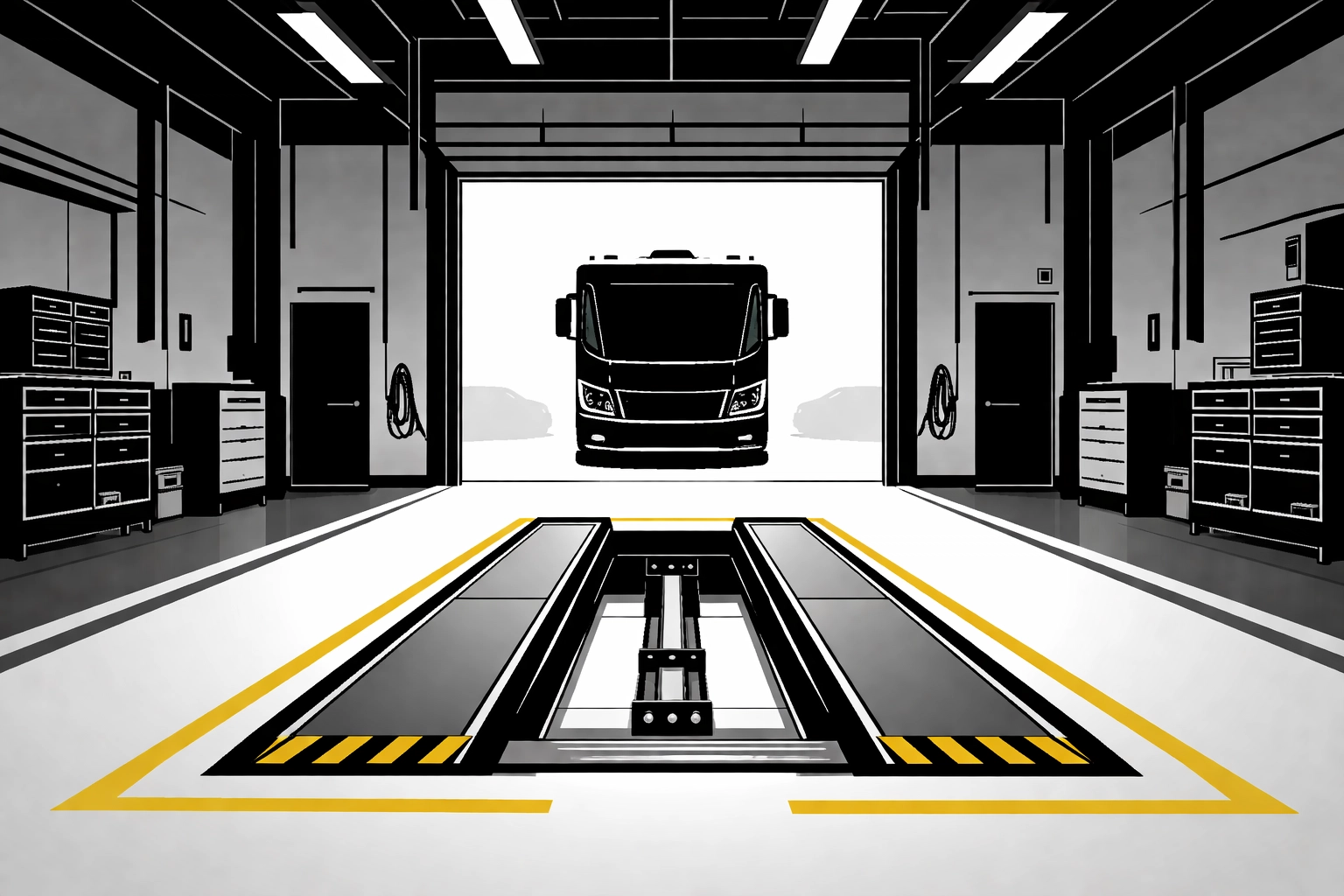
When bays sit empty, your existing techs get overloaded. Burnout accelerates. Your best people start taking calls from competitors or considering mobile work, where they can set their own hours and avoid the dealership grind: warranty admin, constant interruptions, and service writer drama.
Meanwhile, your service backlog keeps growing. Wait times stretch, promised dates slip, and customers who can’t wait: and most can’t: start calling mobile techs or independents. A lot of RV repair work can be completed outside of a dealership, which means every week you’re understaffed, you’re unintentionally training your customers to go elsewhere.
That’s not just a short-term inconvenience. It’s a hit to your service department’s reputation and long-term loyalty.
Why General Mechanics Can't Just "Figure It Out"
Here's where a lot of dealership owners and service managers make an expensive mistake: they assume an experienced auto mechanic or even a diesel tech can transition into RV work with minimal training.
It doesn't work that way.
An RV isn't a vehicle. It's a vehicle fused with a residential structure. Your RV service technician needs to understand:
Chassis mechanics – engine, transmission, brakes, suspension (often on Ford, Chevy, or Freightliner platforms)
Residential plumbing – fresh water systems, black and gray tank management, water heaters, winterization
High-voltage electrical – 30-amp and 50-amp shore power systems, inverters, transfer switches, generator integration
Low-voltage electrical – 12V coach systems, battery management, solar integration
Appliances – refrigerators (including absorption models), furnaces, air conditioners, awnings
Structural systems – slide-outs, leveling jacks, roof membranes, seals, and the water damage that happens when any of these fail
A tech who spent ten years rebuilding transmissions at a Chevy dealer has exactly zero experience tracing a short in a Dometic control board or resealing a Schwintek slide mechanism. Expecting them to ramp up quickly is a fantasy that leads to comebacks, warranty chargebacks, and frustrated customers.
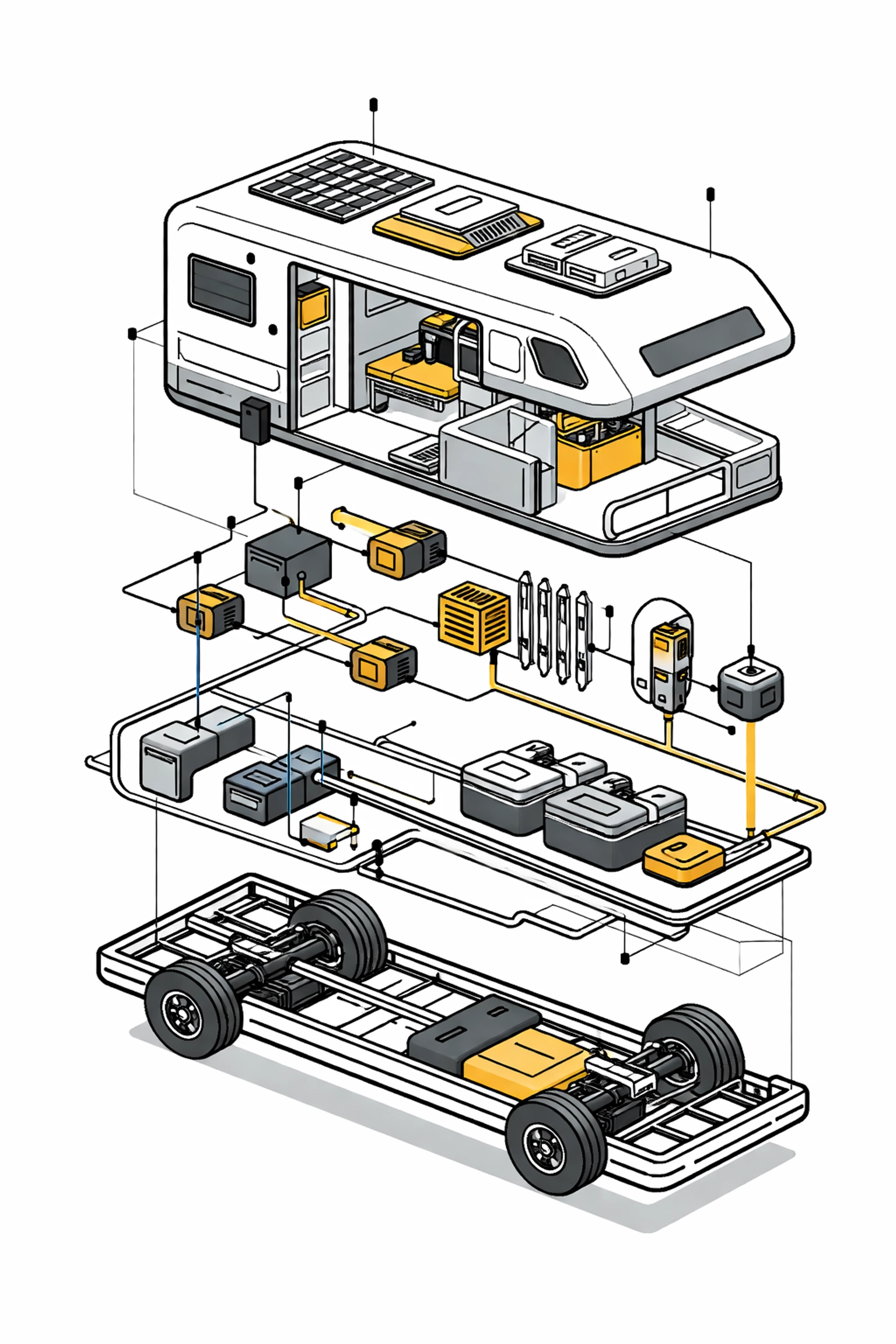
The hybrid nature of RVs means you need a hybrid technician: someone who thinks like an automotive mechanic, a residential electrician, and an appliance repair specialist all at once. That combination is rare, and it doesn't appear on a standard automotive resume.
The Certification Crunch: RVIA and RVDA Reality
Let's talk about certifications, because this is where a lot of hiring managers get tripped up.
The RV industry has its own certification pathways through organizations like the RV Industry Association (RVIA) and the RV Dealers Association (RVDA). The RV Technical Institute (RVTI) has trained nearly 25,000 technicians since 2019, with enrollment growing 20 to 24 percent annually.
Sounds promising, right?
Here's the problem: that training capacity still can't keep pace with demand. Nearly half a million new RVs have been sold annually over the past five years, and there are approximately 10 million RVs already on the road. The math doesn't work. There simply aren't enough certified RV techs to go around.
And certification alone doesn't guarantee competence. A tech might hold an RVTI Level 1 certification but have never worked on a high-end diesel pusher with a Cummins engine and a Spartan chassis. Or they might be RVIA-certified but have only touched towable trailers, not Class A or Class C motorhomes.
When you're screening candidates, you need to dig deeper than the credential. What platforms have they actually worked on? What's their diagnostic process for intermittent electrical issues? Have they ever dealt with a hydraulic leveling system failure in the field?
If you're not asking these questions, you're not really screening: you're just hoping.
Why That "Auto Mechanic" Resume Won't Save You
Let's be blunt about screening realities.
When you post an RV service technician opening, you'll get resumes from auto mechanics, light-duty truck techs, and maybe a few diesel guys looking for a change. On paper, they look qualified. They have ASE certifications. They've worked at reputable shops. They know their way around a scan tool.
But here's what their resume won't tell you:
They've never worked on a coach longer than 25 feet
They don't know the difference between a hydraulic and electric slide-out
They've never traced a parasitic draw in a dual-battery coach system
They have no idea how to diagnose a propane system that won't ignite at altitude
They've never dealt with the customer expectations that come with a $400,000 luxury motorhome

Hiring an unqualified tech and hoping they'll learn on the job creates a cascade of problems: extended repair times, diagnostic errors, comebacks, warranty issues, and: worst of all: damage to units that ties up bays, triggers rework, and erodes customer trust.
The RV service department isn't a training ground for generalists. It's a specialty environment that demands specialty skills from day one.
What Actually Works: Finding RV Technicians Who Can Hit the Ground Running
So what do you do when every job board posting brings in the wrong candidates and your service bays keep sitting empty?
First, stop expecting passive job ads to solve an active talent shortage. The qualified RV service technicians in your market already have jobs. They're not browsing Indeed. If you want them, you have to go find them: or work with someone who knows how.
Second, get realistic about your screening process. Build interview questions around real diagnostic scenarios. Ask candidates to walk you through how they'd troubleshoot a slide-out that's binding on one side. Ask what they'd check first if a customer's inverter trips every time they run the microwave. These questions separate the generalists from the specialists fast.
Third, consider what you're actually offering. Many dealership techs leave not just for pay, but for control of their day: fewer interruptions, less warranty friction, and more predictable scheduling. Mobile work often wins because it feels simpler and more flexible. If your offer doesn’t address that reality: schedule, shop flow, parts availability, clear dispatching, and how you protect tech time: you’re going to keep losing candidates to independent work.
Finally, if you're tired of wading through unqualified applicants and want to focus on running your service department, it might be time to bring in a recruiting partner who actually understands this space. At SourceLine, we specialize in flat-fee recruiting for RV, marine, and powersports technicians: which means you get pre-screened candidates who've been vetted for the exact skills your bays need, without the percentage-of-salary fees that traditional recruiters charge.
The Bottom Line
A vacant service bay isn't a minor inconvenience. It's an operational problem that compounds every week it stays empty: longer schedules, bigger backlogs, more customer frustration, and a reputation hit that’s hard to win back. And filling it with the wrong hire: a generalist who can't handle the hybrid complexity of RV systems: just creates a different set of problems that jam up workflow even more.
The RV service technician shortage is real, it's structural, and it's not going away anytime soon. The dealerships that win will be the ones who get serious about targeted recruiting, rigorous screening, and competitive offers.
Everyone else will keep watching their best customers drive past the service lane: straight to someone who can actually get them back on the road.


Comments